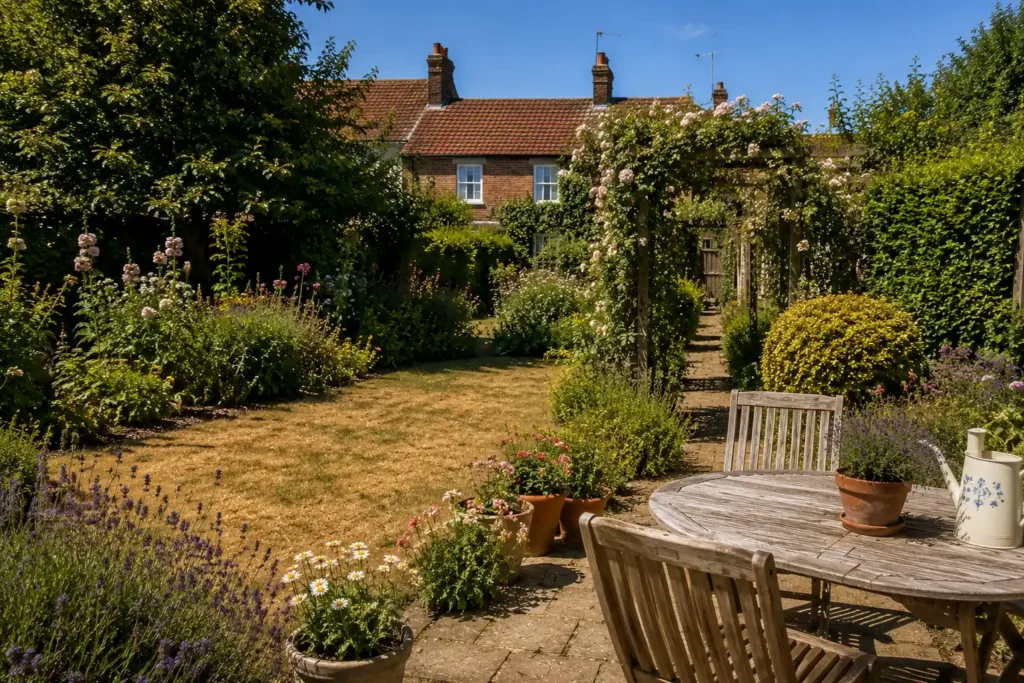
A heatwave can be one of the most stressful events a garden faces. The damage can mount quickly if you don’t respond in the right way to the likes of parched soil, wilting plants, and scorched lawns. But watering at the wrong time, or in the wrong way, can actually make things worse rather than better.
So when should you water a garden in extreme heat? And how can you get the most out of every drop In this guide, we cover the best times to water during a heatwave, how to water effectively for different parts of your garden, and what you can do to give your soil the best possible chance of holding onto moisture in soaring temperatures.
Water Early in the Morning
The best time to water your garden in extreme heat is early in the morning, ideally between 6am and 9am.
At this time of day, the sun is still low, temperatures are at their coolest, and the soil has had the benefit of a cooler night. Water applied in the morning can soak down to root level before the heat of the day causes it to evaporate. It also gives foliage time to dry off before the temperature climbs, which reduces the risk of fungal disease.
The second-best option, if morning watering isn’t possible, is early evening, around 6pm to 8pm. By this point, the fierce midday heat has passed, so evaporation is less of a problem. The main risk with evening watering is that wet foliage left overnight can encourage mildew and other fungal issues, particularly in humid conditions. If you water in the evening, aim the water at the base of plants rather than over the leaves.
When Not to Water a Garden in Hot Weather
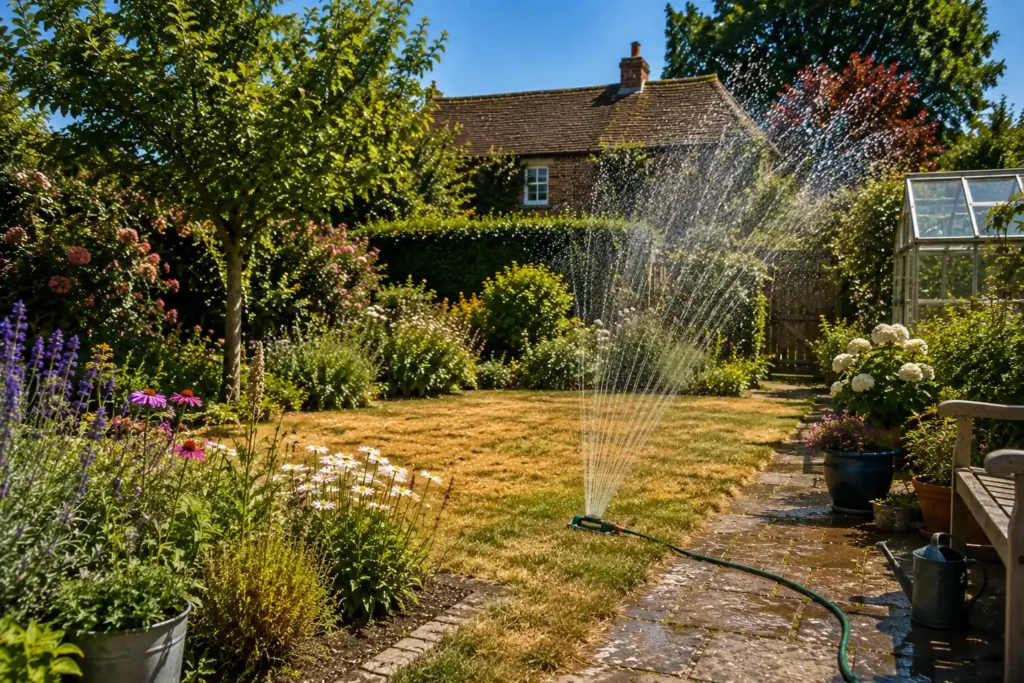
As tempting as it is to grab the hose the moment you see plants drooping at midday, watering in the middle of the day is generally a mistake. Here’s why:
- Water evaporates rapidly from the soil surface in direct sun and high temperatures, so much of what you apply never reaches plant roots.
- Water droplets sitting on leaves in intense sunlight can act like a lens, potentially scorching the foliage.
- Stressed plants may show signs of wilt even when the soil has adequate moisture — this is the plant’s natural response to heat and not necessarily a sign they need more water.
Check the soil before you reach for the hose. Push a finger 5–10cm into the ground: if it feels moist at that depth, watering can wait. If it’s dry all the way down, it’s time to act.
How Often Should You Water During a Heatwave?
There’s no single because it depends on your soil type, what you’re growing, and how extreme the heat is. But, as a general guide:
| Garden area | Frequency in extreme heat |
|---|---|
| Vegetable patches & fruit | Daily or every other day |
| Flower beds and borders | Every 2–3 days |
| Established shrubs and trees | Once or twice a week |
| Containers and pots | Once or even twice daily |
| Established lawns | Allow to go dormant; avoid excessive watering |
| Newly laid turf or seeded areas | Daily — do not let dry out |
Containers dry out far faster than open ground, especially terracotta pots, which are porous and allow moisture to escape through the sides. Check them every morning during a heatwave.
How to Water Effectively in Extreme Heat
Getting the timing right is only half the job. How you water matters just as much.
Water Deeply, Not Frequently
Shallow, frequent watering encourages plant roots to stay near the soil surface, where they’re more vulnerable to heat and drought. Instead, water slowly and deeply to give the water time to penetrate down 20–30cm into the soil where the roots need it most.
A slow trickle from a soaker hose or drip irrigation laid at the base of plants is ideal. A watering can with a long spout directed at the base of plants is also effective. Avoid overhead sprinklers during a heatwave: they lose significant amounts of water to evaporation and can wet foliage unnecessarily.
Water at the Base, Not the Leaves
Always direct water at the base of plants and onto the surrounding soil, rather than over the top of the plant. This reduces evaporation, avoids wetting foliage in the heat, and gets moisture to where it’s needed most: the root zone.
Group Containers Together
If you have lots of pots and containers, moving them into a shaded spot during a heatwave will dramatically reduce how quickly they dry out. Grouping them together also creates a slightly more humid microclimate around the plants, reducing moisture loss.
Don’t Forget Newly Planted Areas
New plants and freshly seeded or turfed areas are particularly vulnerable in hot weather, as their root systems haven’t yet established deep enough to access moisture from lower in the soil. During a heatwave, these areas need daily attention — sometimes twice daily for very small or recently transplanted seedlings.
How to Use Soil to Survive a Heatwave
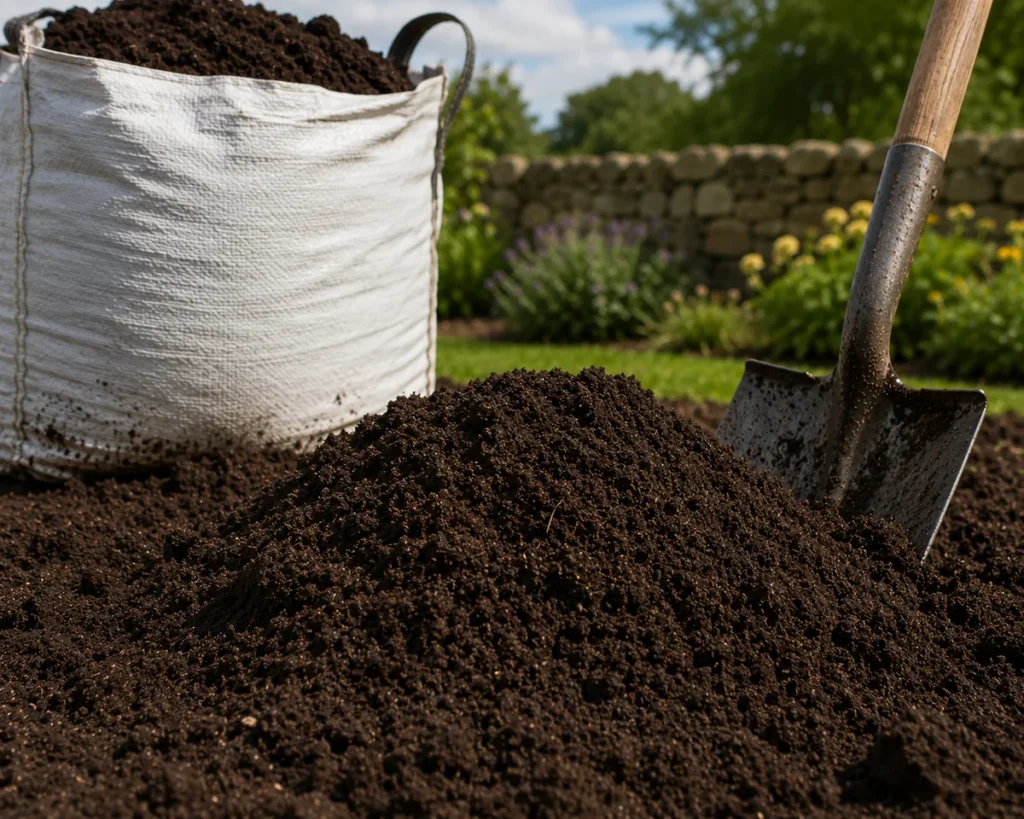
Your watering habits are only as effective as the soil beneath your garden allows them to be. Poor soil structure — whether it’s too sandy and free-draining, or too heavy and compacted — dramatically reduces your garden’s ability to hold onto water during hot spells.
Sandy soils drain very quickly. Water applied to them in a heatwave can pass straight through the root zone before plants can use it. Adding organic matter, such as compost or well-rotted manure, improves the soil’s capacity to hold moisture.
Heavy clay soils can bake hard in extreme heat, forming a crust that repels water rather than absorbing it. Lightly forking the surface and working in organic matter helps break this up and improves water penetration.
A good-quality topsoil with a balanced loamy texture naturally holds moisture better than either extreme. If your borders, beds, or vegetable patch consistently struggle during dry spells, it may be worth topping them up with premium topsoil or enriching them with a beds and borders compost to improve structure and moisture retention over the long term. See our full range of summer soil products for options suited to the warmer months.
Mulch is the Heatwave Gardener’s Best Friend
A layer of bark mulch applied around the base of plants and across the surface of your beds works in several important ways during extreme heat. It:
- Reduces evaporation from the soil surface by up to 70–75%, so water stays in the soil for longer
- Regulates soil temperature, keeping roots cooler even when air temperatures are very high
- Suppresses weeds that compete with plants for moisture
- Gradually improves soil structure as it breaks down over time
Apply mulch to a depth of around 5–8cm, keeping it clear of plant stems and crowns. Mulch before a heatwave arrives, but applying it during dry spells is still highly beneficial. Water the soil thoroughly first, then apply the mulch on top to lock that moisture in.
You can explore our bark mulches and related products to find the right option for your garden.
What About Lawns in a Heatwave?
Lawns often cause the most anxiety during extreme heat. The sight of a yellowing, dry lawn can be alarming. However, in most cases, it’s not as bad as it looks.
Established grass is resilient. It will naturally go dormant in very hot, dry conditions, turning yellow or straw-coloured, but it will recover green again once rain returns or temperatures drop. Watering an established lawn during a heatwave is largely unnecessary unless it has been seeded or turfed within the past year.
If you do feel the need to water your lawn in hot weather:
- Water infrequently, but deeply — a thorough soaking once or twice a week is far better than light daily sprinkles
- Water early in the morning to reduce evaporation
- Raise your mower height during dry spells, as longer grass shades the soil and retains moisture better
- Avoid walking on drought-stressed grass more than necessary
If your lawn has suffered damage or developed bare patches over a hot, dry summer, our Lawn Repair Mix and Turf and Lawn Topsoil can help you restore it once the weather cools — see our grass and lawns guide for more detail.
Watering Different Areas of the Garden in Hot Weather
Vegetable Patches and Fruit Gardens
Crops are among the most water-hungry plants in the garden, particularly fruiting vegetables like tomatoes, courgettes, runner beans, and cucumbers, which need consistent moisture to develop properly. Irregular watering during a heatwave can lead to blossom end rot in tomatoes and splitting in root vegetables.
Water at the base of plants, ideally in the morning, and consider using a vegetable and fruit compost or vegetable and fruit topsoil enriched with plenty of organic matter to help retain moisture around roots. For more guidance, take a look at our vegetable and fruit patches advice page.
Flower Beds and Borders
Established perennials and shrubs are generally more drought-tolerant than annual bedding plants. Focus your watering efforts on any recently-planted specimens and annuals, which have shallower root systems. A layer of mulch across beds and borders will dramatically reduce how often you need to water. Adding a border blend topsoil when preparing new beds gives plants a rich, moisture-retentive growing medium to draw on. See our flower beds and borders guide for seasonal advice.
Trees and Shrubs
Established trees and shrubs typically have deep enough root systems to cope with short heatwaves without supplementary watering. Young trees and shrubs planted within the past two years, however, benefit from a slow, deep watering once or twice a week during prolonged dry spells. Apply water at the drip line (the outer edge of the canopy) rather than against the trunk, and consider a tree and shrub compost mulch to retain soil moisture around the root zone.
Picking the Right Products for Your Garden this Summer
By following the right watering techniques and improving your soil’s ability to retain moisture, you can help your garden not just survive, but thrive during even the hottest conditions. At Alsoils, we offer a wide range of high-quality mulch, topsoil and specialist garden products designed to support healthy growth and maximise water retention. Whether you’re preparing for a heatwave or looking to improve your garden long-term, explore our range to give your plants the best possible foundation.